A career college in Mississauga can provide focused training for students seeking practical skills and career-ready education. This blog helps prospective students understand how a career college can provide practical skills, flexible training, and a clearer path toward their career goals.
Key Takeaways
- Career colleges focus on practical, employment-oriented training.
- Diploma programs can target specific occupations and industries.
- Flexible schedules can suit working students and adult learners.
- Practical training can help students apply classroom knowledge.
- Ontario regulates registered career colleges under provincial legislation.
- Mississauga offers access to diverse industries and employment opportunities.
- Choosing a college should involve reviewing programs, outcomes, costs, and support.
What Is a Career College?
A career college focuses on preparing students for specific occupations or trades. Ontario states that career colleges offer certificate and diploma programs in areas including business, healthcare, information technology, human resources, and trades. Many also provide flexible schedules and multiple enrolment periods. (Ontario)
This approach can appeal to students who want focused education. It can also suit people looking to change careers or develop skills for a new job.
Why Choose a Career College in Mississauga?
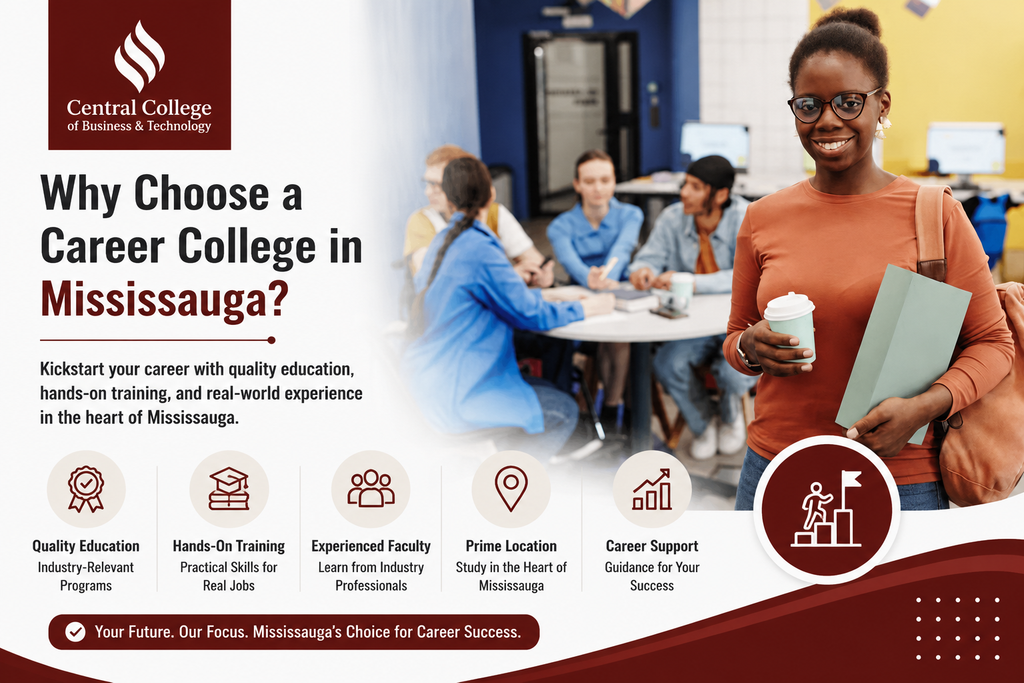
Mississauga provides access to a diverse business community and multiple employment sectors. Students can choose programs based on their career goals, previous education, and preferred industry.
A local campus can also make education more accessible. Students may benefit from classroom interaction, practical training, and opportunities to build professional relationships.
Practical Skill Development
One major advantage is practical skill development. Career-focused programs are designed around knowledge and abilities relevant to specific occupations.
This can help students understand how their education applies to workplace situations. Depending on the program, practical learning can include labs, projects, simulations, or field placements.
Job-Ready Training
Students often choose career colleges because they want to become job ready. Focused curricula can concentrate on occupation-specific knowledge rather than a broad range of general courses.
This does not guarantee employment. However, targeted training can give students a clearer connection between their education and the roles they want to pursue.
Diploma Programs for Career Goals
Career colleges offer diploma programs across several fields. The right program depends on the student’s intended occupation and previous education.
Before enrolling, review the curriculum, duration, admission requirements, practical components, and credential. These details can help you determine whether a program supports your long-term career journey.
Flexible Learning Options
Flexibility can matter for adult learners. Many Ontario career colleges offer different enrolment periods and flexible learning schedules. (Ontario)
This can help students balance education with work or family responsibilities. However, schedules differ between institutions and programs. Always confirm the current timetable before applying.
Smaller Learning Environments
Some career colleges operate with smaller groups than larger institutions. This can create more opportunities for direct interaction with instructors.
Personal support can be especially useful when learning technical or practical subjects. Ask about class sizes, instructor access, academic support, and student services before choosing a college.
Practical Experience and Workplace Skills
Practical experience can help students connect theoretical knowledge with workplace expectations. Some diploma programs include practicums, labs, or other forms of applied learning.
Central College, for example, publishes field practicum components for several of its programs. Its Business Administration Diploma includes 320 hours of field practicum, while its International Business Management Diploma includes 120 hours. (Central College)

Career Support
Education is only one part of starting a career. Students should also consider whether a college provides guidance around resumes, interviews, job searches, and professional development.
Career support can help students understand how to present their education and skills to potential employers. Ask what services are available before enrolment.
Career Colleges and Employers
Career colleges can focus on skills needed in specific industries. Ontario describes career colleges as institutions that prepare students for employment in specific trades or occupations. (Ontario)
That focus can make program selection more straightforward. Students should still research current job postings and employer requirements before choosing a field.
Opportunities for International Students
International students need to consider additional requirements when choosing a college in Canada. These can include admission requirements, immigration documentation, program eligibility, and financial planning.
Central College states that it welcomes international students and provides support for students pursuing education and careers in Ontario. Students should independently confirm current study permit and immigration requirements before making decisions. (Central College)
Ontario Career Colleges Act
Choosing a properly registered institution is an important step. In Ontario, career colleges offering vocational programs must generally be registered under the Ontario Career Colleges Act, 2005. The Superintendent of Career Colleges oversees registration and vocational program approval. (Ontario)
Students should verify the institution and program before paying tuition or signing an enrolment agreement.
Student Protection and the TCAF
Ontario’s Training Completion Assurance Fund provides protection for eligible students if a registered career college stops providing a vocational program. Depending on the circumstances, students may receive an opportunity to complete their training or a refund for eligible unused fees. (Ontario)
This regulatory framework is one factor students should consider when comparing institutions.
Funding and Financial Support
Some students may qualify for government-funded training programs. Better Jobs Ontario, for example, provides eligible applicants with skills training and financial support for approved training options. Career colleges can be among the eligible training providers. (Ontario)
Eligibility depends on individual circumstances. Students should confirm current requirements before including funding in their education plan.
Why Choose Central College of Business & Technology?
Central College of Business & Technology is located in Mississauga and offers programs across business, technology, healthcare, hospitality, and other fields. Its website emphasizes practical training and career development. (Central College)
The college also states that its learning approach combines academic knowledge with practical experience. Its published programs include field practicum components, giving students opportunities to apply classroom learning in workplace settings. (Central College)

Choose a Program That Fits Your Career
The best career college is not necessarily the one with the most programs. It should offer training that matches your career goals and preferred industry.
Compare curriculum, practical training, program length, admission requirements, student support, costs, and credential details. Also review current job postings to understand what employers expect.
FAQs
Is a career college a good option for changing careers?
A career college can be useful for people who want focused training for a new occupation. Programs often concentrate on specific workplace skills and credentials. However, suitability depends on your career goals, previous education, and target industry. Research job requirements before enrolling, then choose a program that teaches the skills employers currently seek.
Are diploma programs at career colleges job ready?
Diploma programs can provide occupation-focused training and practical experience. However, completing a diploma does not guarantee employment. Job readiness depends on the program, your skills, practical experience, and employer requirements. Review the curriculum and practicum structure before enrolling. Checking current job postings can also show whether the program aligns with real workplace expectations.
Can international students attend a career college in Mississauga?
Yes, eligible international students can study at qualifying institutions and programs. Requirements can involve admission, immigration, and study permit rules. These requirements can change, so students should verify current information through the college and Government of Canada. Central College states that it welcomes international students and provides support during their education journey. (Central College)
How do I know if a career college is registered?
Ontario provides information about registered career colleges and explains that vocational career colleges must generally be registered under the Ontario Career Colleges Act. Students should verify both the institution and the specific program before enrolling. Registration and program approval are separate considerations, so check the official provincial information carefully. (Ontario)
What should I look for when choosing a career college?
Start with your career goals and target occupation. Then compare the curriculum, practical training, instructors, program length, admission requirements, credential, student support, and costs. Check whether the institution is properly registered and whether the program meets relevant industry requirements. Reviewing current job postings can also help you assess whether the training matches employer expectations.
Start Your Career Journey
Choosing a career college is a significant education decision. The right program can provide focused training, practical skills, and a clearer route toward your employment goals.
If you are exploring programs in Mississauga, review Central College of Business & Technology’s current offerings, compare program details, and speak with an admissions advisor before enrolling. (Central College)