A micro-credential is a short, focused program that validates specific skills or competencies.
It can be worth pursuing when students need targeted training, career development, or new skills quickly. This guide explains what micro-credentials are, how they work, their benefits, funding options, and when they may be worth pursuing for your career.
Key Takeaways
- Micro-credentials focus on specific, practical skills.
- They can support upskilling, reskilling, and lifelong learning.
- Many programs offer flexible online or hybrid delivery.
- Some Ontario micro-credentials qualify for OSAP funding.
- Digital badges and certificates can provide verifiable proof.
- Employers may value credentials linked to current industry needs.
- A micro-credential complements a degree but does not automatically replace one.

What Is a Micro-Credential?
Micro credentials are short, focused learning programs designed around specific skills or competencies. Unlike broad degree programs, they concentrate on a defined area of knowledge.
For example, a program may focus on project management, presentation skills, technology, or change management. The goal is targeted learning that can address a particular career or workforce need.
How Do Micro-Credentials Work?
A learner chooses a program based on their career or learning goals. They then complete the required coursework, assessments, projects, or other learning activities.
After successful completion, the learner may receive a digital badge, certificate, or other formal endorsement. The exact credential depends on the institution and program.
How Long Do Micro-Credentials Take?
Micro-credentials are designed for shorter periods than traditional programs. In Ontario, an approved micro-credential program for OSAP purposes must consist of a period of study lasting less than 12 weeks. Ontario’s micro-credential regulation
This shorter format can make learning easier to fit around employment, family responsibilities, or other education.
Why Are Micro-Credentials Growing?
Workplaces continue to change as technology, business practices, and industry requirements evolve. Employers may need people with specific skills rather than broad knowledge alone.
Ontario’s strategy has supported micro-credential development connected to labour market gaps and employer needs. The province reports that more than 300 new micro-credentials have been created through its initiatives. Ontario’s micro-credentials strategy
What Skills Can You Learn?
Micro-credentials can cover many areas of professional and technical learning. Programs may address project management, technology, business, communications, leadership, or sector-specific competencies.
The right program should match a clearly defined need. Before enrolling, review the learning outcomes and confirm that the skills apply to your intended career or workplace.
Micro-Credentials and In-Demand Skills
One major advantage is their connection to in demand skills. A focused program can help learners address a particular skill gap without committing to a longer academic program.
Ontario’s micro-credential strategy specifically supports training connected to labour market needs. Programs may therefore reflect regional, industry, or employer requirements.
Are Micro-Credentials Recognized?
Recognition depends on the institution, program, industry, and credential itself. A micro-credential issued by a recognized post secondary institution can provide documented evidence that you completed specific learning.
However, learners should check how employers in their field view the credential. Recognition is strongest when the program has clear outcomes and meaningful connections to industry needs.
What Are the Benefits of Micro-Credentials?
The benefits of micro credentials include focused learning, flexibility, and faster skill development. They can also support professionals who want to update existing knowledge without returning to a lengthy degree program.
For employers, targeted training can help address specific workforce needs. For learners, it can provide another way to demonstrate relevant skills.

Can Micro-Credentials Improve a Resume?
Yes, when the credential is relevant to the position you want. A completed program can demonstrate that you invested time in developing a specific competency.
Some digital credentials can also be shared through professional profiles. A strong resume should explain what you learned and how the skill applies to the role rather than simply listing the credential.
What Is a Verifiable Credential?
A verifiable credential provides digital evidence of an achievement or competency. Depending on the system, it may include information about the issuer, achievement, and learner.
Digital micro-credentials can make achievements easier to share online. Learners should still verify what technology their institution uses before assuming a credential has a particular verification feature.
Can You Add Micro-Credentials to LinkedIn?
Many digital credentials can be shared on professional networking platforms. Learners can use them to highlight completed training alongside their education and work experience.
The value comes from relevance. A credential connected directly to your target role can strengthen your professional profile more effectively than collecting unrelated credentials.
Micro-Credentials vs Traditional Education
A micro-credential is not simply a smaller degree. The two formats serve different purposes.
Degree programs usually provide broader academic education over a longer period. Micro-credentials focus on specific skills and competencies within a shorter learning period.
For many learners, the two can work together rather than compete.
Can Micro-Credentials Complement a Degree?
Yes. A learner may use a micro-credential to build a specialized skill after completing a degree.
For example, someone with a business background could pursue focused training in project management or change management. This approach can help connect existing education with newer workplace requirements.
What Is Stackability?
Some micro-credentials can contribute toward a larger credential or learning pathway. This concept is known as stackability.
However, stackability is not automatic. Each institution determines whether individual credentials can be combined and whether they count toward another program.
Check the institution’s pathway before assuming credits or credentials will transfer.
Are Micro-Credentials Flexible?
Flexibility is another important advantage. Programs may offer online, hybrid, or other flexible delivery options.
This can help learners balance education with employment and personal responsibilities. Ontario’s micro-credential framework supports short-duration training through postsecondary institutions, including universities, colleges, and Indigenous Institutes.
Can You Complete Them Online?
Many micro-credentials are delivered online or through blended formats. The actual delivery method varies by program.
Online learning can make participation easier for people who work full-time or live away from campus. However, some programs may include practical, in-person, or supervised components.
Always check the delivery format before registering.
Are Micro-Credentials Affordable?
Micro-credentials can require less time than traditional programs, but affordability varies by institution and program.
Do not assume every credential has the same cost. Review tuition, fees, materials, and other required expenses before enrolling.
Financial assistance may also be available for eligible programs in Ontario.
Can OSAP Fund Micro-Credentials?
Some Ontario micro-credentials are eligible for OSAP financial assistance. Eligibility depends on the program, institution, and learner.
Ontario states that eligible learners can apply for financial assistance through OSAP for approved micro-credentials. Ontario’s OSAP micro-credential information
The government also publishes specific rules governing micro-credential grants and loans.
What Funding Opportunities Are Available?
Funding opportunities depend on the learner and program. OSAP can provide grants and loans to eligible students enrolled in approved micro-credential programs.
For the 2026–27 academic year, Ontario lists maximum allowable costs of $5,000 per study period for tuition, program fees, books, and equipment. Ontario OSAP maximum aid amounts
These are maximums, not guaranteed funding amounts.
Who Can Benefit From Micro-Credentials?
Micro-credentials can suit several types of learners. Recent graduates may use them to develop additional skills. Working professionals may use them to update existing knowledge.
They can also support people changing careers or returning to education after time away. The strongest choice depends on your specific career objective.
Are Micro-Credentials Useful for Employers?
Employers can use micro-credentials as one signal of targeted learning. Programs developed around employer needs can help learners develop competencies relevant to particular roles.
However, employers will still consider experience, education, communication, and other qualifications. A micro-credential should therefore complement your broader professional profile.
How Should You Choose a Program?
Start with your career goal rather than the credential itself. Identify the skill you need and search for programs that teach it.
Then review the institution, curriculum, learning outcomes, duration, delivery method, assessment process, and credential awarded. Also check whether the program appears on Ontario’s official micro credentials portal or institution-specific listings.
Is a Micro-Credential Worth It?
A micro-credential can be worth it when it solves a specific learning or career need. It can provide focused training without requiring a longer commitment.
It may be less valuable when the credential has little connection to your target role. The best return comes from choosing skills that employers actually use and that strengthen your existing qualifications.
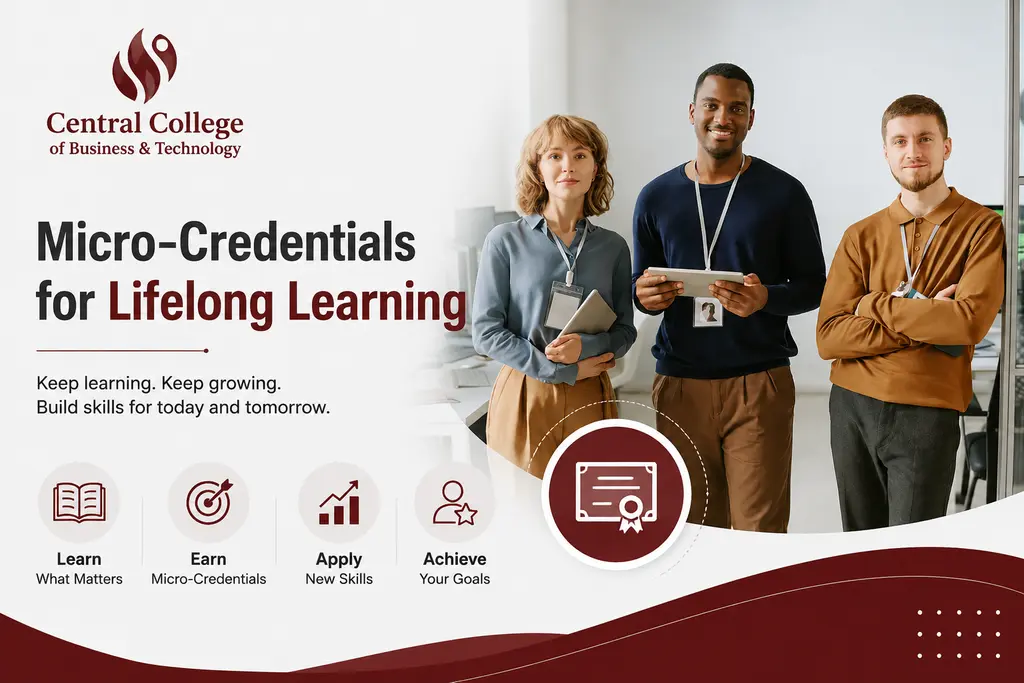
Micro-Credentials for Lifelong Learning
Lifelong learning increasingly involves shorter learning experiences alongside traditional education. Professionals may need to update skills several times during their careers.
Micro-credentials can support that process by focusing on specific competencies. They allow learners to continue developing knowledge without necessarily committing to another multi-year program.
What Should You Check Before Enrolling?
Consider these questions before choosing a program:
- What specific skill will I gain?
- Who issues the credential?
- Is the program connected to industry needs?
- What assessment is required?
- Can the credential be verified?
- Is delivery online, hybrid, or in person?
- Is financial assistance available?
- Can it contribute toward a larger credential?
These questions help separate useful credentials from credentials that simply add another line to your resume.
FAQs
What are micro credentials, and how do they differ from degrees?
Micro credentials are focused learning programs that validate specific skills or competencies. A degree provides broader education over a longer period. Micro-credentials are generally shorter and more targeted. They can complement formal education by helping learners develop a particular skill. They should not automatically be viewed as replacements for degrees or other established qualifications.
Are micro credentials worth adding to a resume?
They can be valuable when the credential matches your target role. A relevant micro-credential can show recent learning and demonstrate specific competencies. Digital credentials may also provide verifiable proof that can be shared online. However, relevance matters most. Several unrelated credentials may be less useful than one credential directly connected to your career goals.
Where can I find micro credentials in Ontario?
You can search programs through Ontario’s official micro credentials portal and through individual post secondary institutions. Ontario provides information about available programs, participating institutions, and financial assistance. Ontario’s micro-credentials portal and program information Program availability changes, so check the institution’s current listing before applying or registering.
What funding opportunities are available for micro credentials?
Eligible learners may receive OSAP grants or loans for approved micro-credentials. Eligibility depends on factors including the learner, program, institution, and financial circumstances. Ontario’s regulations specify eligibility requirements for micro-credential financial assistance. Ontario’s micro-credential financial assistance regulations Always confirm current eligibility before relying on funding for your education costs.
What are the main benefits of micro credentials?
The benefits of micro credentials include focused learning, flexible delivery, shorter study periods, and targeted skill development. They can support upskilling, reskilling, and lifelong learning. Some can also provide digital proof of achievement. Their value depends on the program’s quality and relevance. Choose credentials that address genuine career, industry, or employer needs.
Final Verdict: Are Micro-Credentials Worth It?
Micro-credentials can be worthwhile when they provide a clear skill that supports your career direction. They offer focused learning, flexible formats, and opportunities to demonstrate current competencies.The key is to choose strategically. Look beyond the credential name and evaluate the institution, curriculum, industry relevance, assessment, recognition, and available funding opportunities.For learners who need targeted skills without committing to a lengthy program, a well-chosen micro-credential can be a practical addition to formal education and professional experience.
Ready to explore your options? Start by identifying the skill you need, then compare relevant micro-credentials, institutions, delivery formats, and funding eligibility before enrolling.