
An ECE (early childhood educator) completes an approved ECE diploma and registers with the College of Early Childhood Educators before practising. An ECA (early childhood assistant) supports educators through a shorter program that does not require registration. Central College of Business & Technology in Mississauga offers the ECA program, not an ECE diploma. This guide is for anyone in Ontario weighing entry into early childhood education and trying to understand which credential matches the role and timeline they want.
Key takeaways
- ECEs must register with the College of Early Childhood Educators after completing an approved ECE diploma. Only registered members may use the titles “early childhood educator” and “registered early childhood educator.”
- ECAs work under the supervision of a registered ECE. The ECA role does not require registration with the College.
- Central College’s Early Childcare Assistant Diploma Program runs for 1 academic year and 945 total hours, including 490 hours of field practicum.
- The first five years of a child’s life shape learning and behaviour. Both ECEs and ECAs contribute to children’s development across communication, physical, social-emotional, and cognitive domains.
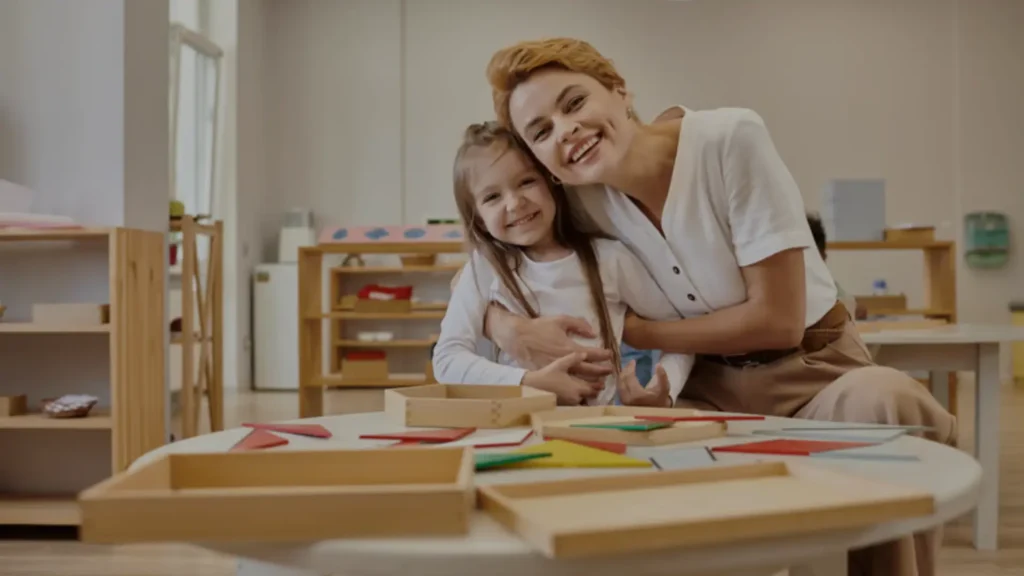
What Is the Difference Between ECE and ECA?
The core difference is training level, registration status, and the responsibilities each role carries in a licensed child care setting.
| ECE | ECA | |
|---|---|---|
| Full title | Early Childhood Educator | Early Childhood Assistant |
| Training | Approved ECE diploma (typically 2 years at an Ontario college) | Shorter program; no approved diploma required |
| Registration | Must register with the College of Early Childhood Educators | No registration required |
| Protected title | RECE / ECE (protected by law) | No protected title |
| Role in child care | Leads and designs child care programs | Assists the ECE under supervision |
| Developmental assessments | Legally accountable for children’s developmental assessments | Does not formally assess or report on child development |
ECEs have legal accountability for children’s developmental assessments and progress reports. ECEAs and ECAs do not formally manage these responsibilities. The distinction is set by Ontario legislation and the College of Early Childhood Educators. In licensed child care settings, the lead educator is typically a registered ECE, though the College allows approved staff to work in place of an ECE in some circumstances.
What an ECE Does vs What an ECA Does
In a licensed child care centre, the ECE leads the room. They design the curriculum, plan activities that support child development across communication, physical, social-emotional, and cognitive domains, write progress reports, and lead parent-teacher communications. They are responsible for the early years programming the children experience each day.
An ECA assists the ECE. They support children during active play and outdoor play, help maintain a safe environment, work with small groups, and carry out activities the lead educator plans. ECAs do not take independent responsibility for curriculum design, developmental assessments, or formal reporting.
Both roles contribute to child well being and positive relationships with children, families, and toddlers across the early years. The difference is who holds the design and accountability responsibilities for what happens in the room.
For more on the day-to-day duties involved in each role, see daycare qualifications in Ontario.
Training: ECE Diploma vs ECA Program
ECE diploma: To become a registered early childhood educator, you must complete an ECE diploma from an Ontario college — typically a two-year program — then apply to the College of Early Childhood Educators for registration. The curriculum covers advanced child development and pedagogy, and ECEs can pursue specialist certifications in areas such as infant care or inclusive education. Registration fees are $260 for the first year and $175 annually after that, per the Ontario government.
ECA program at Central College: Central College of Business & Technology offers the Early Childcare Assistant Diploma Program: 1 academic year, 945 total hours, with 490 hours of field practicum. The program covers child development, health and safety, inclusive practices, and the responsibilities of an assistant working alongside a registered ECE. Graduates are prepared to assist in licensed child care centres, kindergarten classrooms, and early years programs. For admission requirements and intake dates, visit the eca course page.
Who Must Register With the College of Early Childhood Educators?
Under Ontario’s Early Childhood Educators Act, 2007, registration is required for anyone who uses the protected titles “early childhood educator (ECE)” or “registered early childhood educator (RECE),” or who works within the defined scope of early childhood education.
An early childhood assistant working in a child care centre is not required to register — unless that person meets the educational and training requirements for registration, in which case registration becomes mandatory.
ECAs and ECEAs do not use the protected ECE/RECE titles and do not register with the College. Regulatory status differs: ECEs require registration while ECAs do not.
Source: College of Early Childhood Educators — Who is required to become a member. The Ministry of Education oversees licensing under the Child Care and Early Years Act. The ece vs ecea distinction in registration follows from this framework.
ECE vs ECA Salary in Ontario
According to Job Bank Canada (last updated November 2025), early childhood educator assistants in the Toronto region earn:
- Low: $17.95/hour
- Median: $22.00/hour
- High: $32.97/hour
ECEs typically earn more than ECAs, reflecting higher training requirements and broader professional pathways. Wages in licensed child care have been subject to Ontario government wage enhancement programs — confirm current figures with your employer or check Job Bank directly.
For more detail on what ECA roles pay, see the early childhood assistant salary guide. For a comparison with other support roles such as PSW or CSW, see PSW, HSW, CSW, and ECEA roles in Ontario.

Can an ECA Become an ECE Later?
Yes. An ECA who wants to become a registered ECE must complete an approved ECE diploma from an Ontario college — typically a two-year program — and then apply to the College of Early Childhood Educators for registration.
Central College does not offer an ECE diploma. ECA graduates who want to advance to RECE registration need to enrol in an approved ECE diploma program at a college that offers one.
Working as an ECA while completing an ECE diploma is a common path. Transfer credits from an ECA program depend entirely on the receiving institution.
ECE or ECA: Which Is Better for You?
Neither role is universally better — the right choice depends on your timeline, goals, and the responsibilities you want to hold.
Choose the ECA path if:
- You want to enter the early years sector within one academic year
- You want to support children and educators rather than lead a room
- You want direct child care experience before committing to a longer ECE diploma
Choose the ECE path if:
- You want to design curriculum, lead a child care program, and hold full accountability for children’s development
- You want the RECE designation and specialist certifications
- You are prepared for a two-year diploma and the registration process
The ECA role provides a faster entry point. The ECE role carries more responsibility and the legal standing to use the protected RECE title.
Frequently Asked Questions
How to become an ECA in Ontario?
Complete an Early Childhood Assistant program at an Ontario college. Central College’s program runs for 1 year and 945 hours, including 490 hours of field practicum. You do not need to register with the College of Early Childhood Educators to work as an ECA. For full steps, see what you need to be an early childhood assistant.
How to get an ECEA certificate in Ontario?
ECEA (early childhood education assistant) is a term used in some provinces; in Ontario, the role is more commonly called ECA. The training path is the same: complete an early childhood assistant program at a college. Registration with the College of Early Childhood Educators is not required. See the eca course page for program details.
What is an ECA course in early childhood education?
An ECA course is a post-secondary program that trains students to assist registered ECEs in licensed child care settings. It covers child development, health and safety, inclusive practices, and field placement. See what is the early childhood assistant ECA program in Canada for a full overview.
Is early childhood education in demand in Canada?
Demand for early childhood education workers has grown alongside federal and provincial investment in licensed child care. For current data, see early childhood education demand in Canada.
What is early childhood education and child development?
Early childhood education covers the care, learning, and development of children from birth to age 8 across communication, physical, social-emotional, and cognitive domains. The first five years of a child’s life shape learning patterns and behaviour. ECEs and ECAs both contribute to that foundation in different capacities.
Start the Early Childcare Assistant Program at Central College
Central College of Business & Technology in Mississauga offers the Early Childcare Assistant Diploma Program — 1 academic year, 945 total hours, with 490 hours of field practicum. Graduates are prepared to assist registered ECEs in licensed child care centres, kindergarten classrooms, and early years settings.
To learn more or register, visit the eca course page or attend a program information session.
Central College of Business & Technology is located at 1140 Burnhamthorpe Rd W, Unit 201, Mississauga, ON L5C 0A3. Phone: +1 905-566-0507. Email: info@central-college.ca.
About Central College of Business & Technology
Central College of Business & Technology is a registered private career college in Mississauga, Ontario, at 1140 Burnhamthorpe Rd W, Unit 201. Contact: +1 905-566-0507 | info@central-college.ca
Service area
Central College serves students from Mississauga, Brampton, Oakville, Etobicoke, Toronto, and the Greater Toronto Area.
Next step
Review admission requirements and practicum details on the eca course page at Central College.